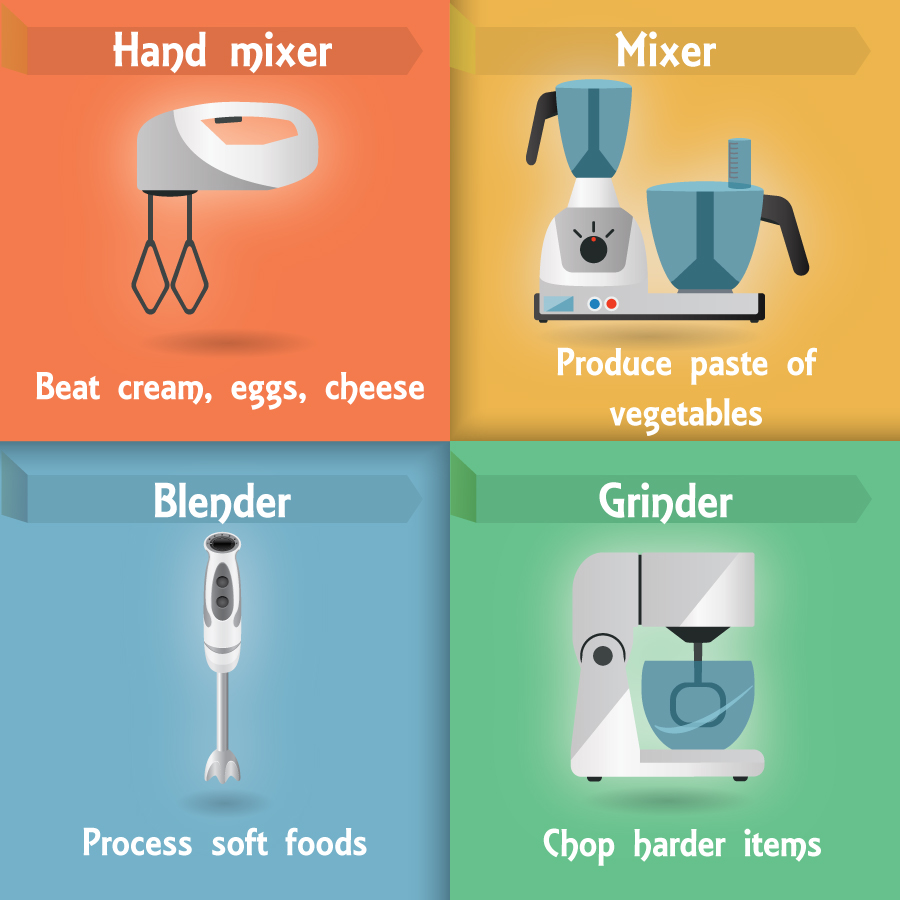
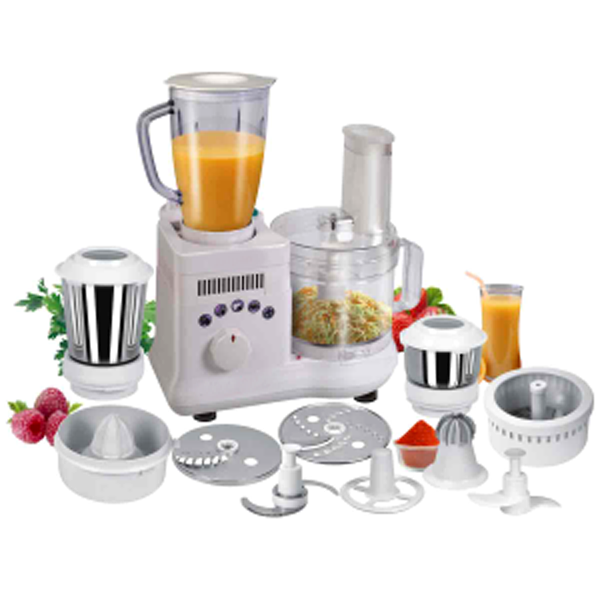
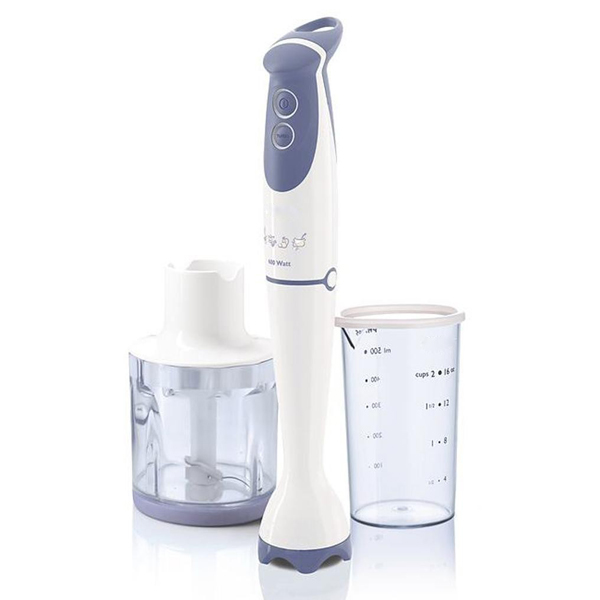
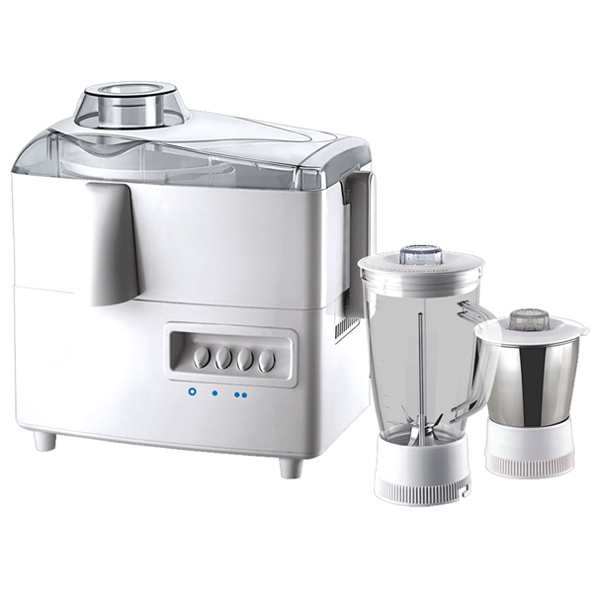
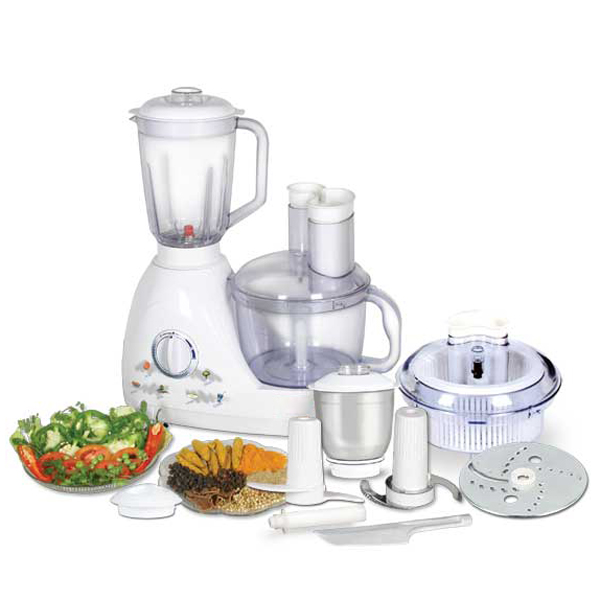
Hate spending hours in the kitchen? Reduce cooking time by letting a food processor take care of chopping, dicing, grating and mixing food. Depending on your budget and your need, you can get a basic system with a single function or one that performs several.
In this guide you'll learn about:


Ideal for small and large families alike as well as for small eateries and fast food joints.
The question of which food processor to buy really depends on what you're looking to get out of it. Aside from the types, you'll need to decide between manual and electric models that are very different from each other.
Food processors should have a capacity that meets your requirements. A 3-jar processor should have at least a large 1.5 litre jar, a medium 1.25 litre jar, and a small jar of 0.50 or 0.25 gm.
Food processors should be powered by a motor that can handle moderate to heavy usage. A 450-500 watt motor can serve everyday needs while motors of 750 watts and more can handle heavier loads.
The pulse or incher feature lets you control how much force should be applied when processing different types of foods. It's a handy function to have when prepping items like eggs, tomatoes and cream.
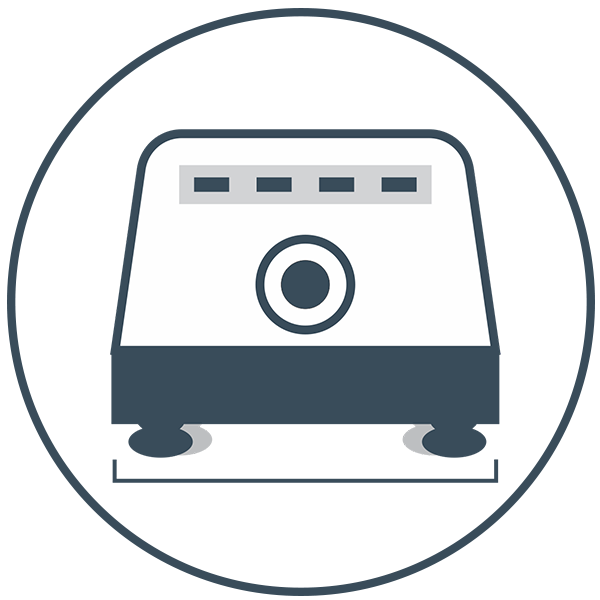
Choose a processor with a heavy and non-slip base to prevent the machine from tilting and falling over.
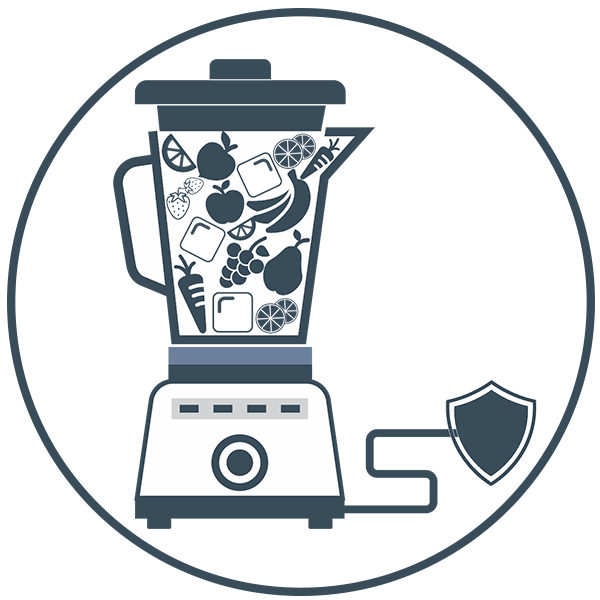
A machine that doesn't start up if food is overloaded can prevent the motor from burning and food from spilling.
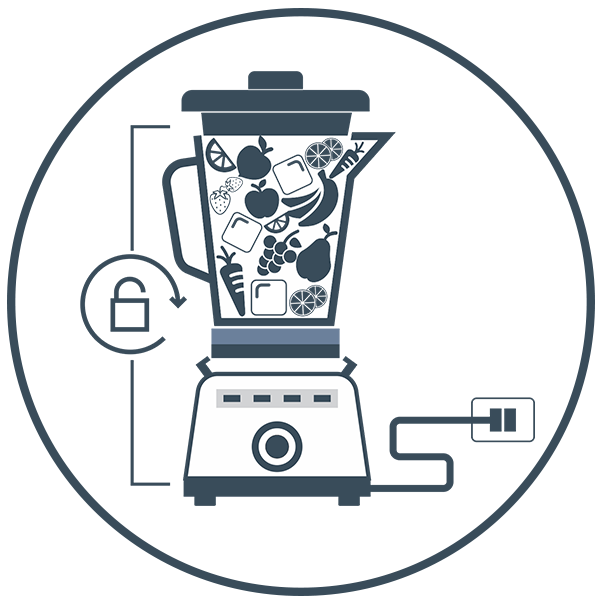
A locking mechanism will stop the food processor from starting unless the jar is properly placed in. It's a safety feature every food processor should have.
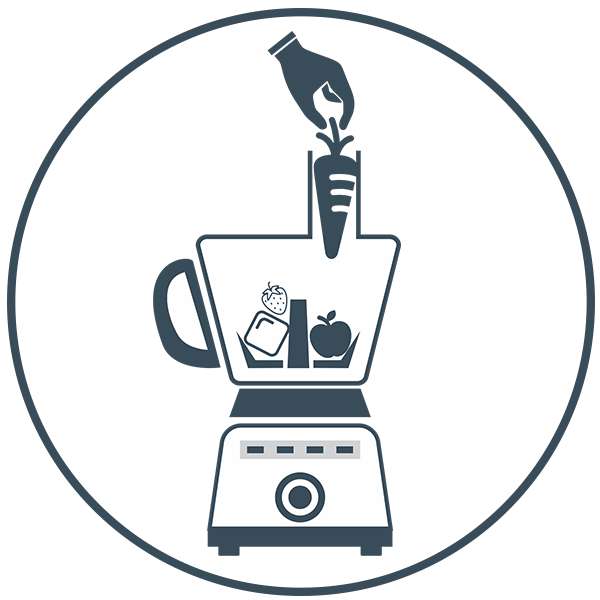
Having a separate feeding tube lets you place food into the machine while it's running, saving time.
To get the most out of your machine, make sure it can process both dry and wet foods.
When shopping for food processors, it's very important to keep quality in mind even with inexpensive products. You also want to make sure you get the best return on your investment.